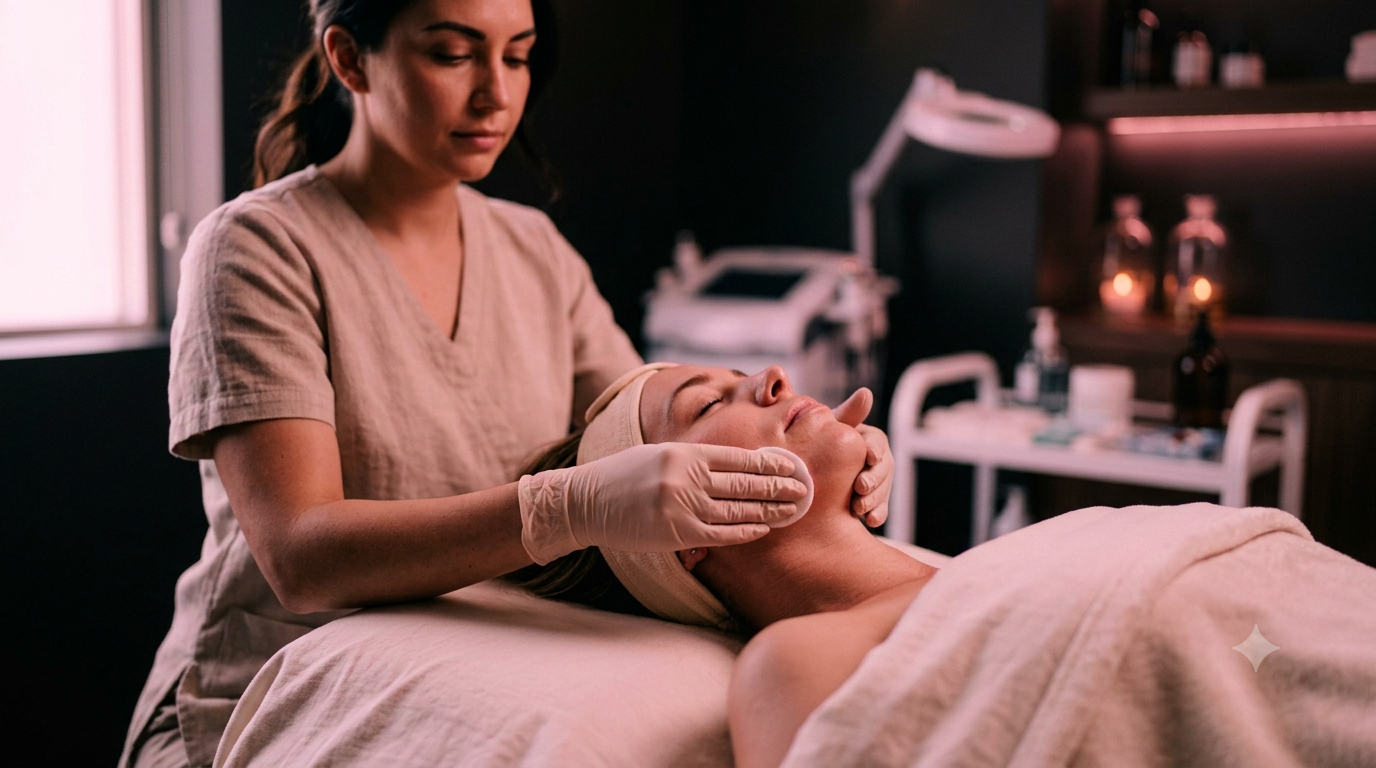
Before and after content is the most powerful thing an aesthetics clinic can post on social media. A single Botox transformation video or laser result Reel can drive more bookings than weeks of polished brand content. Clients want to see what's possible before they commit to a treatment — and a well-shot before and after shows them exactly that.
The problem is that Instagram has rules around this type of content, and they aren't always clearly explained. Clinics get posts removed, accounts flagged, and in some cases reach drops noticeably after a violation. The result is that a lot of med spas either avoid before and after content entirely — and miss out on their highest-converting format — or post without understanding the rules and pay for it later.
This post breaks down what Instagram actually allows in 2026, how to frame your results content so it performs without getting pulled, and the common mistakes that get clinics into trouble.
01 / FIVEWhy Before & After Content Is the Highest-Converting Format for Aesthetics Businesses
Most content on Instagram is about awareness. Before and after content is about decision-making. When someone is considering a lip filler treatment or a laser resurfacing session, they're not looking for educational content — they're looking for proof. They want to see a real result from a real patient at your clinic.
That's why before and after Reels consistently outperform other content types for med spas, dental clinics, and beauty businesses. The viewer is already in the consideration phase. They've been thinking about the treatment. Your post shows up at exactly the right moment with exactly the right evidence, and if the result is compelling and the production is clean, the next action is to book.
The data backs this up. Aesthetic and cosmetic treatment content has some of the highest save rates on Instagram because users are bookmarking results they want to show their injector or use as a reference for their own appointment. Saves signal to the algorithm that the content has long-term value — which increases reach without requiring paid promotion.
Before and after Reels are saved more than almost any other content type in the aesthetics niche. Saves signal long-term value to the algorithm — which means more organic reach without spending on ads.
The challenge isn't whether to post before and after content. It's how to do it in a way that Instagram allows and that actually converts viewers into booked appointments.
02 / FIVEWhat Instagram Actually Allows (And What Gets You Flagged or Removed)
Instagram's advertising policies — which also govern what can be boosted or promoted — restrict certain types of before and after imagery, particularly content that implies a dramatic physical transformation or targets body image in a way that could be harmful. But organic before and after content operates under a different, slightly more permissive set of rules. The key is understanding where the line is.
What is generally fine on organic posts:
- Skin texture, tone, and clarity results (facials, laser, microneedling, chemical peels)
- Lip filler, cheek filler, and jawline definition — framed as enhancement, not correction of a "flaw"
- Smile transformations for dental clinics (whitening, veneers, Invisalign)
- Hair removal results
- Brow, lash, and cosmetic tattooing transformations
- Post-treatment skin healing progression (day 1 through day 7 after a peel, for example)
What consistently gets flagged or removed:
- Content that frames the "before" state as a problem, defect, or source of embarrassment
- Weight loss, body contouring, or fat reduction content that emphasizes dramatic size change
- Copy that uses language like "fix," "correct," "ugly," or implies the patient was unattractive before
- Any content targeting minors or ambiguous-age subjects
- Paid promotions featuring before and after imagery — Meta's ad policy restricts this for boosted posts even when the organic post is fine
The distinction Instagram draws is between content that celebrates a result and content that shames a starting point. The first is allowed. The second gets flagged. This matters enormously for how you write your captions and how you frame the visual.
Professional before & after content for your med spa or clinic
Reel Time Creations films and edits before and after content at your location in Toronto and the GTA — strategy, production, and posting handled for you.
Book a Free Strategy Call03 / FIVEHow to Frame Before & After Content So It Performs Without Getting Pulled
The visual is only half of before and after content. The caption and framing determine whether the post converts and whether it stays up.
Lead with the result, not the problem. Instead of "Look at what we fixed," try "This client wanted to enhance her natural lip shape — here's what two syringes of filler did." The outcome is the same. The framing is completely different, and the second version won't trigger a flag.
Use the patient's language, not clinical language. If your client said "I just wanted to feel more like myself," that's a better caption hook than any clinical description of the treatment. Real patient sentiment reads as authentic and avoids the problem-framing trap.
Show the journey, not just the gap. A single side-by-side photo is fine, but a short Reel that walks through the treatment process — the consultation, the treatment room, the result — performs better and gives more context. It also makes the content feel less like an advertisement and more like a story.
Caption structure that works: open with a one-line result statement, follow with a brief treatment description (treatment name, number of sessions or units, healing time if relevant), close with a CTA to book or DM for more information.
Tag the treatment and the practitioner. This builds association between your account and specific services, which helps with discovery when people search for those treatments on Instagram.
If you're describing what was "wrong" before the treatment, rewrite it to describe what the client was "hoping for" instead. Same story, safer framing — and it reads better anyway.
04 / FIVEThe Biggest Mistakes Clinics Make With Before & After Posts
Most before and after content that underperforms or gets pulled makes one of a handful of predictable mistakes.
Poor lighting consistency. The "before" photo is taken in a dim treatment room on a phone and the "after" photo is taken in natural light. The result looks more dramatic than it actually is, which damages trust when clients come in and see real-world results. Consistent lighting between before and after shots isn't just an Instagram best practice — it's how you build credibility.
No patient consent documentation. This is non-negotiable. Before posting any patient's image, you need signed consent that specifically covers social media use. Most clinics have consent forms for treatment but forget to include social media explicitly. If you're unsure whether your consent process covers this, update it before you post.
Boosting before and after posts. Meta's advertising policies are stricter than the organic content policies. A post that performs well organically will often get rejected when you try to promote it. Keep before and after content organic. Use a different creative — a testimonial, a treatment explainer, or a promotional post without before and after imagery — for your paid campaigns.
Inconsistent patient angle and expression. The "before" photo has the patient looking slightly down with a neutral expression, and the "after" has them smiling and looking up. The comparison looks manipulated even if it isn't. Standardize your photo protocol: same angle, same expression, same camera distance.
Captions that over-promise. "Erased 10 years in one session" is the kind of claim that attracts complaints and can lead to account action. Let the image do the work. Your caption should describe what was done, not make promises about what the viewer will achieve.
05 / FIVEA Simple Formula for Before & After Content That Drives Bookings
After working with med spas and aesthetics clinics across Toronto and the GTA, the format that consistently drives the most bookings from before and after content looks like this:
Visual: A short Reel (15 to 30 seconds) that opens on the before, transitions to the after with a clean cut or reveal, and ends with a card showing the treatment name, the number of sessions, and your clinic's handle. Filmed in the same location with the same lighting for both shots.
Audio: Use a trending sound on a low volume under the video. Trending audio significantly increases Reel reach regardless of content type.
Caption structure:
- Line 1: The result in one sentence. "Six months of Invisalign at [Clinic Name] — and she couldn't be happier."
- Lines 2–3: Brief treatment context. What was done, how many sessions, what to expect.
- Line 4: Patient voice (optional but powerful). A short quote from the patient about their experience.
- Line 5: CTA. "Book a free consultation via the link in bio" or "DM us to learn more."
Hashtags: 5 to 8 targeted hashtags. Mix treatment-specific (#lipfillertoronto, #botoxresults), location-specific (#torontomedspa, #gtaskincare), and result-specific (#skingoals, #smilegoals). Avoid overly broad hashtags like #beauty or #skincare — your content disappears in the volume.
Posting cadence: Two to three before and after posts per week is sustainable for most clinics. More than that and you risk your feed looking like a catalogue rather than a brand. Mix in staff content, education posts, and behind-the-scenes Reels between transformation posts to keep the account feeling human.
Reel Time Creations helps med spas, dental clinics, and beauty businesses in Toronto and the GTA create professional before and after content that converts. From on-site filming to editing and posting strategy, we handle the content so you can focus on treatments. Learn more about our content creation service or our social media management for med spas — or book a free strategy call to talk through your clinic's content goals.